The Man Behind Our Name
A Legacy of Vigilance Since 1780
John Paulding: Revolutionary Hero
Early Life and Service
John Paulding was born in 1758 in Westchester County, New York, into a family of Dutch descent that had settled in the region generations earlier. When the Revolutionary War erupted, Paulding answered the call to serve in the Continental Army, demonstrating the courage and commitment that would later define his most famous act.
During his service, Paulding was captured twice by British forces. His experiences as a prisoner of war gave him intimate knowledge of British military practices and uniforms — knowledge that would prove crucial in the events of September 1780.
The Capture of Major Andre
On the morning of September 23, 1780, John Paulding, along with Isaac Van Wart and David Williams, were stationed as volunteer militiamen near Tarrytown, New York, watching for British movements and Loyalist activity. What began as a routine patrol would become one of the most significant moments of the Revolutionary War.
A lone traveler approached on horseback, well-dressed and confident. The man identified himself as John Anderson, a merchant. But something didn't sit right with the three militiamen. Paulding, wearing a captured Hessian coat, initially confused the traveler, who began speaking freely, believing he was among friends.
When the militiamen revealed their true allegiance, the traveler produced a pass signed by General Benedict Arnold, commander of West Point. Rather than accepting the pass and letting the man go — which would have been the easy choice — Paulding and his companions decided to search him further.
Hidden in the man's stockings, they discovered papers detailing West Point's defenses, troop positions, and plans for its surrender to the British. The "merchant" was in fact Major John Andre, Adjutant General of the British Army, and the papers proved that Benedict Arnold was a traitor.
"No, by God, even if you give us ten thousand guineas, you should not stir a step!"
— John Paulding's response when Major Andre offered a bribe for his release
Andre, desperate to escape, offered the three men his horse, watch, and any sum of money they desired. Despite being poor farmers who could scarcely imagine such wealth, Paulding refused. His famous response has echoed through history as a testament to incorruptible patriotism.
The Fidelity Medal
Congress recognized the extraordinary service of Paulding, Van Wart, and Williams by awarding them the first military decorations in American history. The "Fidelity Medallion" was created specifically to honor their act, featuring an intertwined wreath of laurel with the Latin inscription "VINCIT AMOR PATRIAE" — "Love of country conquers."
In addition to the medal, each man received a pension and a silver medal bearing their names. These were the only such medals awarded during the Revolutionary War.
Later Life and Legacy
John Paulding lived out his remaining years as a respected member of his community. He died on February 18, 1818, and was originally buried in what is now Van Cortlandt Park. In 1827, his remains were moved to the Old Dutch Burying Ground in Sleepy Hollow, where a prominent monument marks his grave.
His legacy lives on throughout the region. The village of Paulding in Ohio, Paulding County in Georgia, and numerous streets and institutions bear his name. And since 1901, the John Paulding Engine Company has carried forward his legacy of vigilance and service in Sparkill and Palisades.
Why We Bear His Name
When our founders chose to name this fire company after John Paulding, they recognized the deep parallels between his heroism and the calling of firefighters.
Vigilance
Just as Paulding watched for danger to his community, we maintain 24/7 readiness to respond when called.
Incorruptibility
Like Paulding refusing a fortune, we serve without expectation of reward or recognition.
Brotherhood
Three men stood together that day. Today, our members stand together to protect our neighbors.
Split-Second Decisions
Paulding's quick thinking saved a nation. Every day, firefighters make critical decisions under pressure.
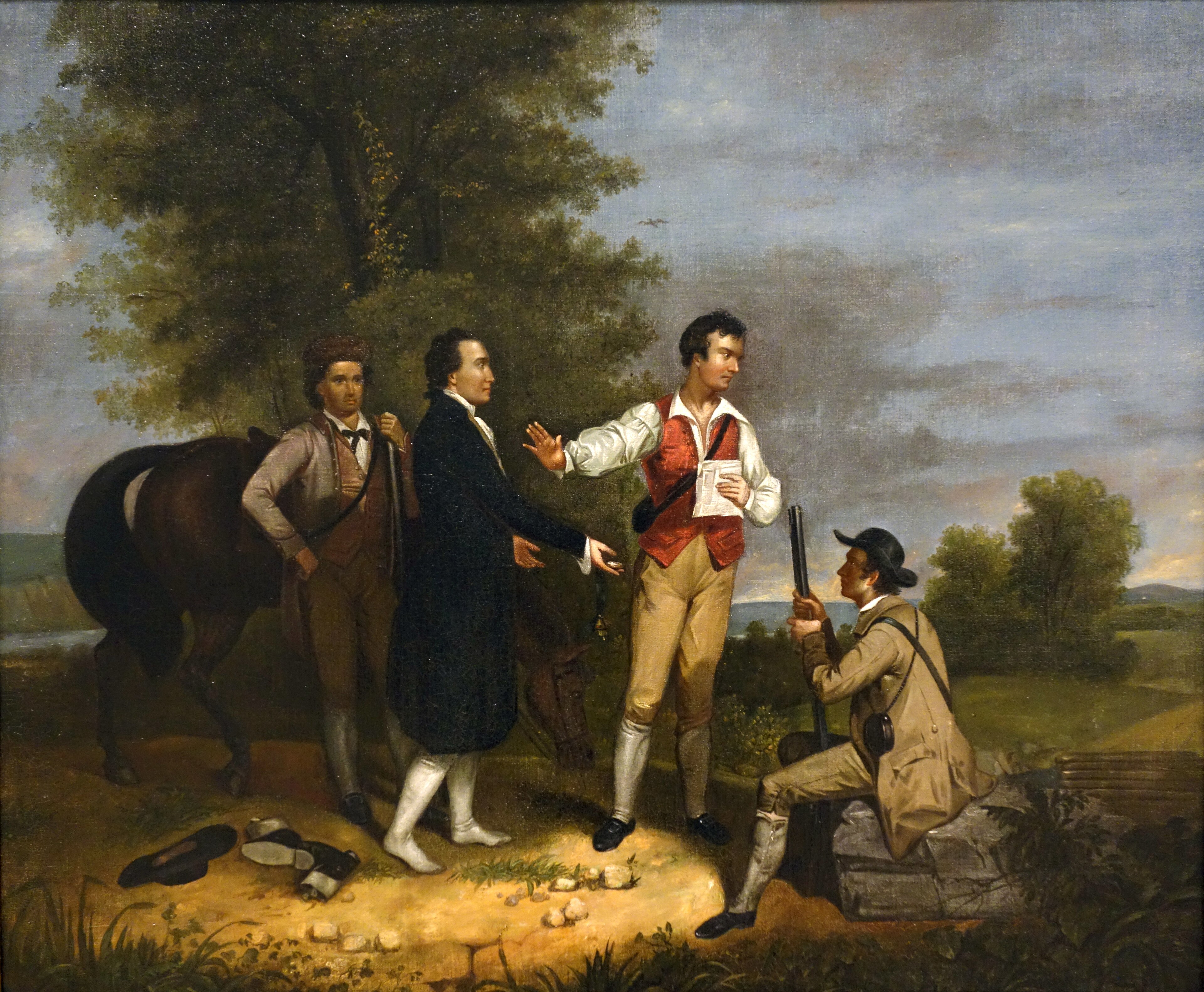
"The Capture of Major Andre" (1833) — Asher Durand, Worcester Art Museum
"Ordinary citizens, doing their duty with integrity, can change the course of history."
— The legacy of John Paulding, and of every volunteer who has served this company for 125 years
Our Company Timeline
From the inspiration of a Revolutionary War hero to 125 years of protecting our community
Paulding Captures Andre
John Paulding and two fellow militiamen capture British spy Major John Andre, exposing Benedict Arnold's treason and saving West Point.
St. Agnes Convent Fire
A devastating fire at St. Agnes Convent highlights the need for organized fire protection in the Sparkill area.
Company Founded
John Paulding Engine Company is officially established, named in honor of the Revolutionary War hero whose capture of Major Andre saved the nation.
San Francisco Relief
The company organizes a circus to raise funds for San Francisco earthquake relief, demonstrating early community spirit.
Official Incorporation
John Paulding Engine Company receives official incorporation as a volunteer fire department.
First Motorized Apparatus
The company acquires its first motorized fire truck, modernizing firefighting capabilities in the district.
New Fire Station
The company moves to its current location on Route 340, providing improved facilities and response capabilities.
100th Anniversary
John Paulding Engine Company celebrates a century of volunteer fire service to the community.
125th Anniversary
Celebrating 125 years of dedicated volunteer service, honoring the legacy of John Paulding and generations of firefighters.